Home › Brick Veneer Installation
Our team installs high quality brick veneers in Fayetteville, NC to give your home the look of solid brick without the weight and cost. We carefully prepare surfaces, apply moisture barriers, and set each thin brick for a straight, even finish. Refresh your siding, entry, or accent walls with durable brick cladding.
Superior Masonry Fayetteville provides professional brick veneers throughout Fayetteville, NC, North Carolina and the surrounding area. Our licensed, insured crew delivers safe, clean, on-time work with a free estimate before anything begins. Call (910) 335-8764 or request your free quote.
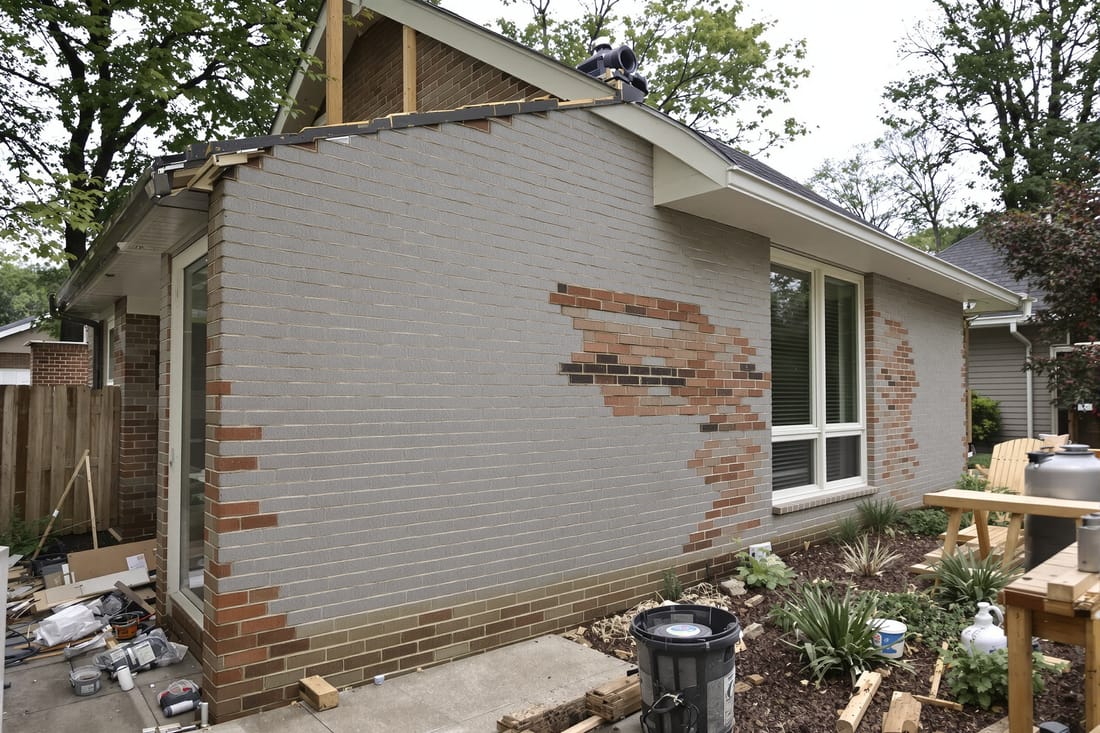
Brick veneers that fit Fayetteville homes and weather
Brick veneers give you the look of a full brick wall without the weight and cost, but they still need to be planned and installed like a real masonry system, especially in Fayetteville’s humid, storm‑prone climate. At Superior Masonry Fayetteville, we approach brick veneer installation as both a finish and a protective skin for your home.
In our area, summer humidity, sudden downpours, and occasional tropical storms can drive water behind poorly installed veneers. That is why we focus heavily on drainage details, flashing, and the right mortar mix for our local conditions. We see a lot of veneer problems around Fort Bragg, Hope Mills, and East Fayetteville where the original installer skipped weep holes or used the wrong type of building paper, which leads to bubbling siding, interior moisture, and brick faces popping off.
Brick veneers can go over framed walls with sheathing, over block, or over existing masonry if the structure is sound. We begin by confirming how your current walls were built, what type of sheathing is there, and whether there is any prior moisture damage. Then we match the veneer system to your specific house rather than forcing a one‑size‑fits‑all solution. Our goal is a brick finish that looks like it has always been part of the home and holds up to years of Fayetteville heat, storms, and pollen season.
How our brick veneer installation process actually works
Every brick veneer project with Superior Masonry Fayetteville follows a clear, hands‑on process so you know what is happening at your home each day.
1. Site visit and wall inspection: We start with an on‑site assessment of the exterior walls, including siding condition, framing alignment, and window and door flashing. If we suspect hidden moisture issues, we may recommend a small exploratory opening so we do not trap existing problems behind new brick.
2. Surface prep and moisture barrier: Once we remove any siding that needs to come off, we repair damaged sheathing and install a code‑approved water‑resistive barrier, usually a combination of housewrap and flashing tapes. Over framed walls, we install corrosion‑resistant metal lath or a brick veneer support system designed to carry the weight of the brick units.
3. Starter course and support: For traditional anchored brick veneers, we set a steel angle or brick ledge at the base, fastened to the structure or foundation. This supports the first course and keeps the brick line level across the whole wall, which is critical on longer runs like garage faces and rear elevations.
4. Brick laying and ties: We lay the brick veneers in lifts, using masonry ties or clips that anchor the veneer to the structure at regular intervals. These ties are what keep the veneer stable during high winds and temperature swings, which are common in Fayetteville. We maintain a consistent air space behind the brick to allow drainage.
5. Weep holes and flashing: At the bottom course, above openings, and over roofline transitions, we install flashing and weep systems. These details are rarely noticed visually, but they are the reason our veneers can shed water instead of trapping it behind the wall.
6. Tooling joints and cleanup: We tool mortar joints to the profile you choose, usually a concave or slightly recessed joint for better water shedding, then clean the face of the brick with masonry‑safe cleaners. Finally, we perform a detailed walk‑around with you to point out all the key features and answer questions about care and maintenance.
Design choices: brick styles, patterns, and details for Fayetteville homes
Brick veneers are not just red rectangles in straight lines. With the options available today, you can get anything from a historical downtown Fayetteville look to a clean modern profile, all within a veneer system.
Color and texture: We regularly install smooth wire‑cut bricks for a newer subdivision look (areas like Jack Britt and Kings Grant), as well as tumbled or molded bricks that mimic older homes closer to Haymount. Color ranges from traditional red and brown blends to charcoal, cream, and multi‑color variegated tones. For clients concerned about fading in our strong sun, we help you choose bricks with integral color rather than just surface coatings.
Sizes and formats: Thin brick veneers can be about half an inch to one inch thick and are often used for interior accent walls and tight clearances. Full‑bed veneer units are thicker and feel more like a traditional wall even though they are not structural. In some cases, we blend both options on one property, for example full‑bed brick on the front elevation and thin brick on a chimney chase.
Patterns and accents: Running bond is the most common pattern, but we often integrate soldier courses above windows, rowlock sills, or herringbone insets in porch walls to break up large surfaces. These accents do not add much cost if they are planned from the start, and they can tie into existing brick on steps, walkways, or garden walls.
Trim and transitions: Because many Fayetteville homes combine brick with vinyl, fiber cement, or stone, we pay attention to how materials meet at corners, soffits, and along the foundation. Proper use of expansion joints, control joints, and sealants in these transitions keeps the veneer looking tight during seasonal expansion and contraction.
What affects cost and how to avoid surprise expenses
Homeowners often ask why brick veneer prices vary so much from one estimate to another. Superior Masonry Fayetteville is transparent about what drives cost so you can compare bids fairly.
Wall condition and access: If your existing sheathing or framing is damaged from leaks or previous siding issues, we need to repair that before installing brick veneers. Corner lots, tight side yards, and multi‑story walls may require more scaffolding and labor, which affects total price. We point these factors out during the first visit so they are not surprise line items later.
Type of veneer system and brick chosen: Full‑bed brick veneers with structural support angles typically cost more in labor and materials than thin brick adhered systems. Premium brick brands, special textures, and custom blends also raise material costs. We often prepare a “good, better, best” breakdown so you can see how different brick choices affect your budget.
Detail level: Soldiers, arches, keystones, custom sills, and complex patterns add labor time. If your budget is tight, we will help you place those details where they have the most visual impact, such as the entry or garage front, and keep simpler patterns on less visible walls.
Moisture and structural corrections: In Fayetteville we frequently find missing flashing around windows or transitions where previous siding was installed. Correcting these issues while we are already working is usually cheaper than bringing someone back later. We call these items out clearly so you can decide what to tackle now versus later.
Permits and HOA requirements: Some neighborhoods require architectural approval for exterior material changes. We help you gather the right product data, sample boards, and photos so your HOA review goes smoother, which can prevent delays that sometimes add indirect costs like extra rental time for dumpsters or scaffolding.
Common brick veneer problems in Fayetteville and how we prevent them
Because we repair as much brick as we install, Superior Masonry Fayetteville has a clear view of what typically goes wrong with brick veneers in Cumberland County and how to avoid the same issues on your home.
Trapped moisture and efflorescence: The white powdery staining you sometimes see on brick is often a sign that water is getting into the wall and dissolving salts that then migrate to the surface. In our humid climate, inadequate weep paths or missing air space behind the veneer are the usual culprits. We follow spacing rules for brick ties, leave a proper cavity, and use weep materials that are proven to work in high rainfall areas.
Cracked mortar joints and brick movement: Homes here experience seasonal soil movement, especially in areas with clay. When brick veneers have no control joints or are hard‑joined against other materials, they can crack at corners and around openings. We design expansion and control joints into longer runs and use flexible sealant at strategic transitions so the veneer can move slightly without ugly cracks.
Improper support at openings: We see sagging veneer above garage doors and large windows where the wrong lintel was used or it was not adequately tied back. Our crews size steel lintels for the actual spans and loads involved, accounting for local wind loads and code requirements.
Low quality mortar or poor joint tooling: Mortar that is mixed too weak, or slopped in without proper tooling, breaks down faster under wind‑driven rain. We use mortar types and additives that perform well in North Carolina’s temperature range and humidity, and we tool joints to shed water rather than hold it. This is a detail casual observers never think about, but it has a big impact on how long your brick veneers stay tight and attractive.
If you are considering brick veneers on a new build, an exterior facelift on an older Fayetteville home, or need to correct existing veneer issues, we walk you through each of these concerns in plain language and explain exactly how our installation approach reduces the chances of future problems.